



Stress: What It Is, Symptoms, Causes, and How to Manage It
By Iñigo Uriarte Pueyo
Doctor of Pharmacy in the Department of Pharmacy and Pharmaceutical Technology at the University of Navarra.
Stress is a normal response to situations we perceive as challenging, demanding or threatening. In certain moments, it can help us react and concentrate. However, if the tension is very intense, occurs frequently or continues over weeks or months, it can affect sleep, concentration, mood and everyday life.
Sometimes we know exactly what is causing us stress. Other times, we experience an almost constant state of alertness without being entirely sure where it comes from. Understanding what is happening, recognising the signs and observing the extent to which it affects everyday life can help us decide which changes may be useful and when it is worth seeking help.
What Is Stress?
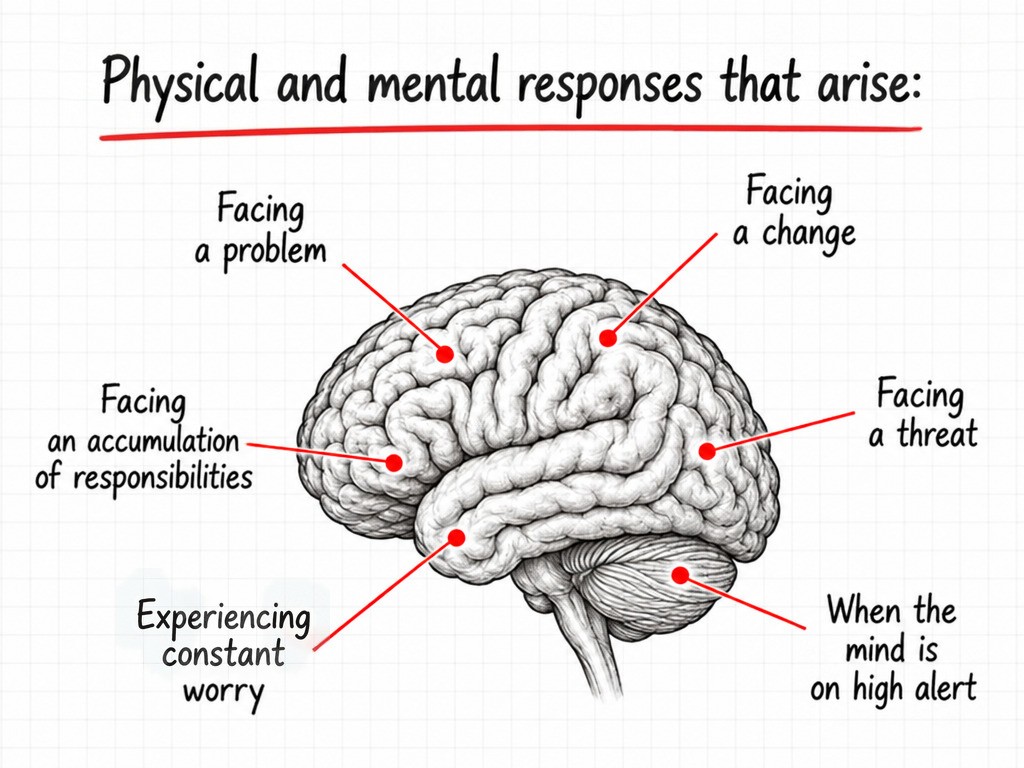
Stress is the physical and mental response that occurs when we feel that a situation requires significant effort or adaptation. It can arise in response to a problem, a change, a threat, a buildup of responsibilities, or a concern that keeps the mind on high alert. The World Health Organization (WHO) describes it as a state of worry or mental tension caused by a difficult situation and reminds us that everyone experiences some degree of stress.
Feeling stressed before an exam, during a house move, or in a particularly challenging week can be part of a normal response to a demanding situation. Experiencing stress does not, in itself, mean that someone has an illness or psychological disorder.
What Happens in the Body When We Experience Stress?
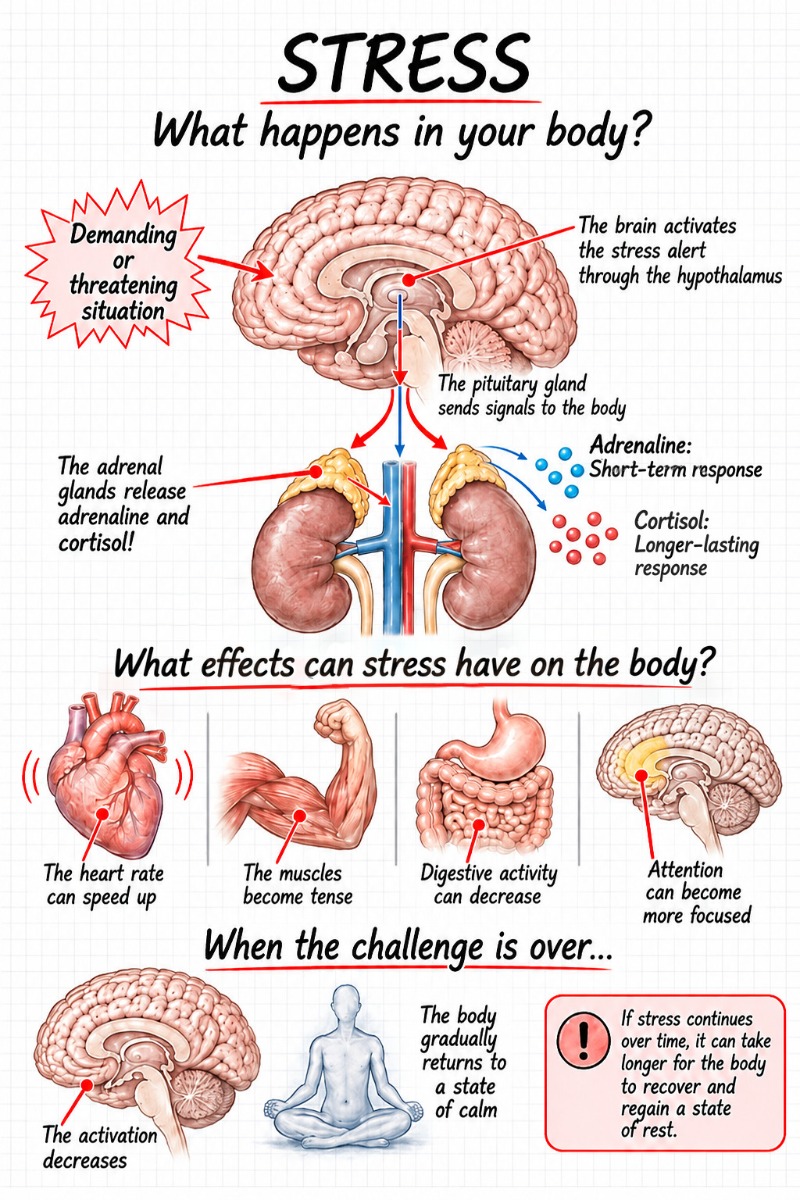
When faced with a demanding situation, the body temporarily increases its state of alertness so it can respond quickly. Muscles tense up, the heart rate may increase, and attention becomes focused on what we perceive as important or threatening.
Hormones such as adrenaline and cortisol play a role in this response, along with other mechanisms. Once the challenge is over, this activation usually decreases, and the body gradually returns to a calmer state. Problems arise when stressful situations occur continuously or when it becomes difficult to return to a state of rest.
What Are the Symptoms of Stress?
Stress can manifest itself through physical symptoms, emotional changes, difficulties concentrating, and changes in certain habits. Not everyone reacts in the same way, and no single symptom, on its own, proves that stress is the underlying cause.
Physical Symptoms of Stress
Stress can cause a variety of physical symptoms. Some of the symptoms that may occur include:
-
Tension or pain in the neck, shoulders, or jaw.
-
Feeling low on energy.
-
Difficulty falling asleep or getting proper rest.
-
Stomach discomfort, diarrhoea, or constipation.
-
Changes in appetite.
-
Heart palpitations or an increased heart rate during moments of tension.
-
Dizziness in some people.
-
Changes in sexual desire.
MedlinePlus also includes several of these manifestations among the signs that may occur in stressful situations.
If a symptom is new, severe, occurs frequently, or persists even after the situation has improved, it should be assessed on its own merits rather than automatically assumed to be caused solely by stress.
Mental and Emotional Symptoms
Stress can make it more difficult to concentrate, relax, make decisions, or stop thinking about pending tasks. Irritability, nervousness, feeling overwhelmed, and reduced motivation are also common.
A person may continue working, looking after their family, and fulfilling their responsibilities while still feeling constantly overwhelmed and needing considerably more effort to do the same things they used to do.
Changes in Behaviour and Habits
When stress persists, it can also change the way people rest, interact with others, or cope with difficulties. Some people give up activities they previously enjoyed, become more socially withdrawn, work excessively long hours, or turn more frequently to alcohol, tobacco, or other substances in an attempt to switch off.
Over time, a difficult cycle can develop: the ways of coping with stress begin to undermine precisely the habits that would help with recovery.
Why Does Stress Occur?
Stress can arise from external problems, such as work or family difficulties, but also from worries or states of alertness for which we cannot identify an obvious cause. Usually, there is no single cause; instead, several factors tend to build up over time.
Work, Studies, and Excessive Responsibilities
An excessive workload, deadlines, lack of control, conflicts, and difficult working hours are common sources of stress. In the workplace, not everything depends on employees learning to manage their time better.
The WHO identifies excessive workloads or work pace, excessively long or inflexible working hours, lack of control, insufficient support, harassment, and job insecurity among the risks to mental health.
An impossible schedule cannot be solved simply by breathing better. When the cause can be changed, addressing it is also part of managing stress. If tension arises mainly when returning to work after a holiday, practical advice on getting back into a work routine can also be helpful.
Family, Financial, or Health Problems
Grief, separation, long-term caregiving responsibilities, illness, or financial difficulties can also cause significant or prolonged stress. Even positive life events, such as moving house, starting a new job, or having a child, can require considerable adjustment over a period of time.
Can You Experience Stress Without an Apparent Cause Even When Everything Is Going Well?
Yes. It is possible to feel constantly tense or on high alert without identifying a major external difficulty that explains what is happening. Constantly anticipating problems, being overly self-demanding, feeling that there is always something left to do, or having experienced poor sleep for a long time can all contribute.
There are also health conditions that can contribute to nervousness, fatigue, or heart palpitations. Therefore, if the discomfort persists without a clear explanation, it is important not to automatically assume that everything is caused by stress.
Expressions such as "internal stress" or "endogenous stress" are sometimes used to describe this situation, but "endogenous stress" is not an established clinical category. What matters is not finding a label, but understanding what is sustaining the feeling of being constantly on alert.
Why Does the Same Situation Cause More Stress for Some People Than for Others?
The same situation may feel manageable for one person and extremely demanding for another. Factors such as the intensity of the problem, previous experiences, quality of sleep, available support, and sense of control all play a role.
Therefore, feeling highly stressed does not mean being less strong or being worse at managing life. The response depends on the relationship between the demands we face and the resources available to us at that particular time.
Acute Stress vs. Chronic Stress: What Is the Difference?
Acute stress occurs in response to a specific situation and usually subsides once that situation is over. Chronic stress persists over an extended period because the pressure continues or because it becomes difficult to recover between one stressful situation and the next.
|
Aspect |
Acute Stress |
Chronic Stress |
|---|---|---|
|
Duration |
Short-term; usually decreases once the situation is over. |
Persists for weeks or months. |
|
Examples |
An exam, a presentation, an argument, or an unexpected event. |
Prolonged financial problems, a difficult work situation, long-term caregiving responsibilities, or ongoing worry. |
|
Recovery |
Calm usually returns once the challenge is over. |
It may be difficult to relax even when there is nothing urgent. |
|
What to look for |
Whether the heightened state of alertness decreases once the situation ends. |
Whether tension is becoming almost a permanent state. |
There is no exact number of days that allows someone to self-diagnose chronic stress. It is more useful to observe whether there are genuine periods of recovery or whether it is difficult to relax even when nothing urgent seems to be happening.
A different situation is the discomfort that occurs specifically after a holiday and improves as you readjust to your routine. This can be better understood by looking at post-holiday syndrome, its symptoms, duration, and how to cope with it.
Is All Stress Bad?
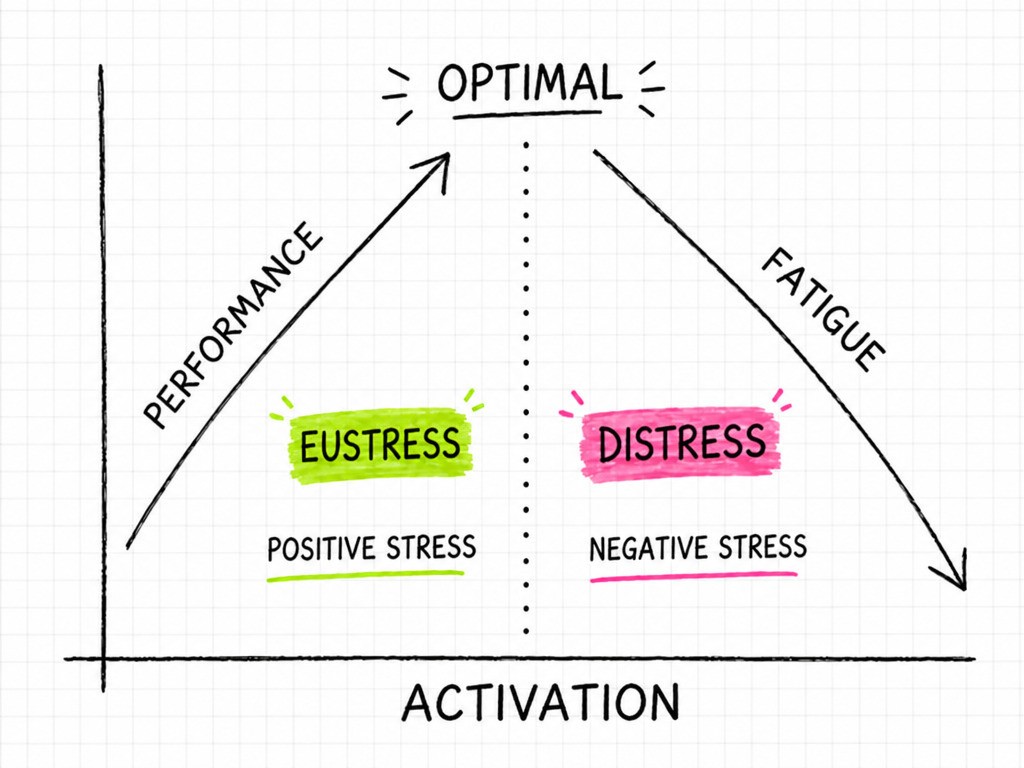
No. Moderate and temporary activation can help us concentrate and respond to a challenge, whereas stress that is too intense or prolonged can eventually interfere with our well-being.
This is where the terms eustress, associated with a positive or manageable response to a challenge, and distress, which occurs when a situation begins to exceed the resources available to cope with it, come from. They are not two diagnoses or two completely separate categories.
Stress and Anxiety: What Is the Difference?
Stress is usually related to a recognizable pressure or situation, whereas anxiety can persist even when there is no clear or immediate danger. Both can cause restlessness, tension, sleep problems, and difficulty concentrating.
For example, an exceptionally demanding week can trigger stress that decreases once the workload is over. With anxiety, however, worry may continue even when the immediate situation is calm.
The distinction is not always clear-cut, and both can occur at the same time. If worry is intense, difficult to control, or begins to interfere with everyday life, it is advisable to discuss it with a doctor or psychologist.
How to Know If Stress Is Affecting You Too Much
Stress requires more attention when it stops being occasional and begins to interfere with sleep, relationships, concentration, work, or health. Rather than focusing on a single symptom, it is more useful to look at the overall picture.
Do you find yourself sleeping poorly for a long time? Do you struggle to switch off even when you have free time? Are you more irritable? Is your ability to concentrate getting worse? Have you stopped doing activities you used to enjoy? Do you rely on alcohol or other substances to relax?
The important question is not just "Am I stressed?" but rather, "To what extent is this situation affecting my life?"
How to Manage Stress in Everyday Life
Managing stress involves understanding what is sustaining the tension, changing what can be changed and allowing sufficient time for recovery. There is no single technique that works equally well for everyone.
Identify What Is Sustaining the Tension
Observing when stress increases and what happens just beforehand can help identify patterns. For a few days, it may be useful to write down which situations cause the most tension, what thoughts come to mind, how well you have slept and what was happening at the time.
Sometimes there is a very specific cause. In other cases, several smaller factors tend to recur, such as insufficient rest, too many tasks, difficulty setting boundaries, and constant worry about unfinished responsibilities.
Address the Cause Whenever Possible
If there is a source of stress that can be changed, addressing it is usually more helpful than simply getting used to putting up with it. This may involve changing priorities, delegating tasks, asking for help, sharing responsibilities, setting boundaries or discussing difficult working conditions.
Reassess Your Worries and Self-Imposed Expectations
When there is no clear external cause, it is worth observing whether your mind continues to maintain a state of alertness even during calm moments. Constantly anticipating problems, second-guessing decisions or feeling that resting is a waste of time can make it very difficult to switch off.
This cannot be solved simply by telling yourself to "stop worrying". When these patterns persist, a psychologist can help you understand what is keeping them going and develop other ways of responding to them.
Protect Your Sleep
Getting enough sleep supports recovery and makes the demands of the following day easier to manage. If poor sleep has become a problem in itself, exploring its possible causes and useful strategies can help improve sleep quality.
Maintain Regular Physical Activity
Regular physical activity can help manage stress and provides additional health benefits. Exercise does not need to become another demanding obligation: walking, swimming, cycling, dancing or playing a sport you enjoy are all ways to stay active.
Breathing and Relaxation Techniques
Slow breathing and other relaxation techniques can temporarily reduce feelings of physical and mental tension in some people. A systematic review reported beneficial effects on stress and anxiety in adults, although the authors also highlighted limitations in the available evidence.
These techniques can support recovery, but they should not be used to make a harmful situation indefinitely tolerable when that situation can actually be changed.
Make Time for Other People and Activities
Maintaining contact with other people and making time for enjoyable activities can help prevent worries from dominating your thoughts throughout the day. We cannot always choose to stop thinking about a worry, but we can avoid allowing work, responsibilities or problems to become the only things in our daily routine.
Can Dietary Supplements Help with Stress?
Dietary supplements may be considered as a form of support in specific situations, but they do not replace rest, necessary changes to your environment or professional care when needed. There is also no supplement that can relieve stress completely.
Some nutrients have authorised health claims. Magnesium, for example, contributes to the normal functioning of the nervous system and normal psychological function. It also helps reduce tiredness and fatigue. However, this does not mean that a magnesium supplement treats stress or anxiety.
Sura Vitasan's product range includes magnesium ATA, formulated with ATA Mg® (magnesium acetyl taurate). Each capsule provides 55 mg of elemental magnesium from 821 mg of ATA Mg®.
Vitamins B2, B3, B6, and B12 also contribute to the normal functioning of the nervous system and normal energy metabolism, and help reduce tiredness and fatigue. Ultra B Complex contains different forms of B vitamins. These health claims refer to the normal physiological functions of these nutrients, not to the treatment of stress or anxiety.
Ashwagandha is a different case. It has been studied in people experiencing perceived stress, and some reviews have found positive results. However, there are differences between the extracts, dosages, duration of use, and populations studied.
If you are considering this ingredient, it is important to understand what has been studied, the limitations of the evidence, and the precautions associated with its use. Sura Vitasan also offers an Ashwagandha supplement.
Taking supplements is not necessary simply because you feel stressed. If you take medication, have a diagnosed medical condition, are pregnant, or are breastfeeding, consult a healthcare professional before using them.
When to Consult a Doctor or Psychologist About Stress
It is advisable to seek professional help when stress becomes difficult to control, persists over time, or starts to significantly affect your health and your ability to manage everyday life.
Particular attention is needed if you experience significant insomnia, episodes of intense fear or panic, persistent sadness, loss of interest, increased alcohol or other substance use, or difficulty carrying out your usual activities.
A family doctor can assess physical symptoms, medication, and other health conditions that may be contributing to the problem. A psychologist can help identify what is sustaining the stress and develop strategies to cope with it.
Severe chest pain, significant breathing difficulties, fainting, or other serious physical symptoms require medical attention and should not automatically be attributed to stress.
Frequently Asked Questions About Stress
How Can You Reduce Stress During a Moment of High Tension?
There is no technique that eliminates stress immediately, but it is possible to temporarily reduce the body's level of activation. When the situation allows, stepping away for a few minutes, breathing slowly, going for a walk, or focusing on a simple task can help restore a sense of calm. Afterwards, it is important to address the underlying cause if it is still present.
Does Being Stressed Mean Having High Cortisol Levels?
No. Feeling stressed does not tell you what your cortisol levels are, nor does it automatically mean that you have an excess of this hormone. Cortisol tests are used to investigate specific health conditions, not as a general test to prove that someone is stressed.
Are Stress and Burnout the Same Thing?
No. Stress can occur in any area of life, whereas burnout specifically relates to the workplace. The WHO describes it as an occupational phenomenon associated with chronic workplace stress that has not been successfully managed.
Conclusion: Understanding What Sustains Stress Is the First Step
Managing stress is not simply about trying to relax. It also involves understanding what is keeping the tension going and addressing it whenever possible.
Getting enough sleep, staying active, maintaining contact with other people and using relaxation techniques can support recovery. However, if stress persists, you cannot find a clear explanation for it or it begins to significantly affect your life, consulting a doctor or psychologist can help you understand what is happening and determine the most suitable course of action.
⚠️ Responsible Reminder: Dietary supplements are not a substitute for medical treatments or diagnoses. The information presented here is for general educational purposes only and is not intended to prescribe medication, provide treatment recommendations, or replace any medical advice or professional treatment. If you are undergoing treatment, taking medication, or have any medical condition, always consult a healthcare professional before starting to use dietary supplements.