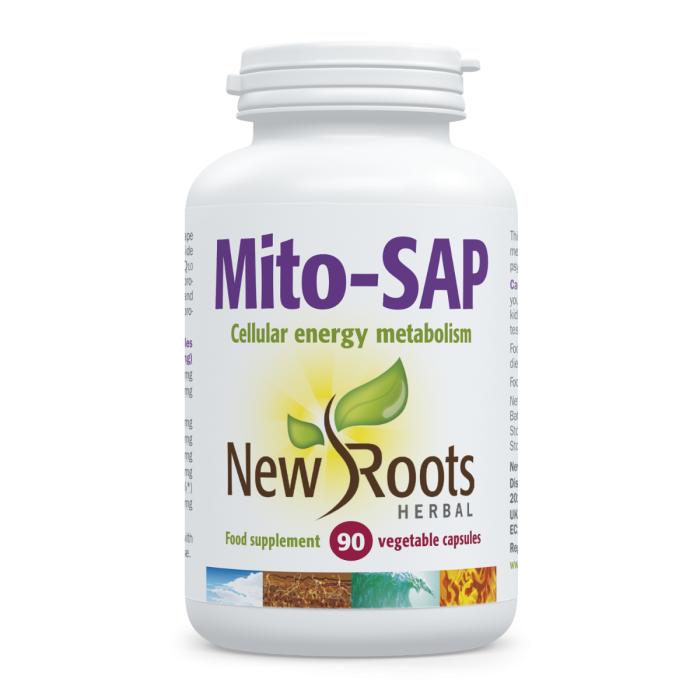
Mito-SAP is a synergistic formula containing key nutraceuticals that help improve mitochondrial health. Mitochondria, the engine of the cell, are crucial organelles for cell survival and cell death, and are involved in important functions such as oxidative phosphorylation, ATP synthesis, signalling and proliferation. Mitochondrial dysfunction caused by oxidative stress and ageing has been linked to various diseases such as cardiovascular disease, neurodegenerative diseases and cancer.
MITOCHONDRIAL METABOLISM AND ITS IMPLICATIONS FOR HEALTH
Mitochondria, often referred to as the "powerhouse of the cell", are complex cellular organelles that exist as a tubular network and are the most active and important organelle in defining ongoing cell survival and death (1). Mitochondria consume almost 90% of the total oxygen content in the cell to enable oxidative phosphorylation and adenosine triphosphate (ATP) synthesis (1). Cells contain between 1,000 and 2,500 mitochondria, and an average cell uses 10 billion molecules of ATP per day, which translates into a requirement of 3.0 × 1025 ATP molecules in an adult.
Initially, the function of mitochondria in the cell was thought to be limited solely to the generation of energy in the form of ATP. However, research in recent decades has shed light on the versatile role of mitochondria in cellular activities such as signalling, proliferation and cell death (1,2). Importantly, the size, number and location of mitochondria in a cell depend on cellular requirements. Given the increasing recognition of the crucial role of mitochondria in a large number of cellular processes, it is evident that mitochondrial dysfunction is linked to the pathogenesis of various diseases (1). For example, mitochondrial dysfunction has been linked to coronary heart disease (CHD) and diabetes (3).
Oxidative stress and mitochondrial damage:
Various compartments of the mitochondria work together to generate ATP in a complex multi-step process involving the electron transport chain complex (ETC) and oxidative phosphorylation (OXPHOS) (2). Nutrient deficiencies, environmental toxins and oxidative damage affect the normal functioning of mitochondria. In addition, the main source of oxidative stress in cells is the leakage of oxygen and high-energy electrons from mitochondria when key nutrients or protective antioxidant molecules are missing (2). The mitochondrial respiratory chain is also a major source of reactive oxygen species (ROS), mainly the superoxide radical and hydrogen peroxide. Due to the production of ROS, biological damage can occur to lipids, proteins and cellular DNA. In particular, mitochondrial DNA (mtDNA) is extremely sensitive to ROS damage due to its proximity to the region of ROS production (4). Therefore, mitochondria become important sources and targets of oxidative damage (4).
Mitochondrial dysfunction in neurodegeneration:
The close relationship between mitochondrial dysfunction and neurodegeneration is explained by the fact that the brain uses 70 % of ATP (1). In neuronal cells, mitochondria accumulate predominantly at sites of high energy demand, such as presynaptic terminals, nodes of Ranvier, active growth cones and branches of neurons (3).
Mitochondria and ageing:
One of the causes of mitochondrial dysfunction is ageing, which is characterised by decreased mitochondrial respiration and oxidative capacity, increased oxidative stress, reduced mitochondrial mass and morphological changes in mitochondria (3). These are signs of unhealthy ageing, so maintaining mitochondrial health is critical during ageing for a healthy life (3).
Mitochondrial dysfunction in ischaemia-reperfusion injury:
Ischaemia-reperfusion (I/R) injury of the heart represents a major health burden, mainly associated with acute coronary syndromes (5). Mitochondria occupy a fixed fractional volume (≈ 21 % of total cardiac mass) in mammals and are strategically located close to myofibrils to ensure the supply of a large amount of ATP. Disruption of the mitochondrial electron transport system is a potential source of free radicals leading to I/R injury. Mitochondrial dysfunction, which leads to cardiomyocyte death during I/R injury, is mainly due to several mechanisms, including calcium dysregulation, ATP depletion, release of proapoptotic proteins and oxidative stress (5).
INGREDIENTS:
ACETYL L-CARNITINE: is an acetylated derivative of L-carnitine, an essential amino acid crucial for the transport of long-chain fatty acids across the inner mitochondrial membrane for the process of β-oxidation. Acetyl L-carnitine is better absorbed and more efficiently transported than L-carnitine (6). Supplementation with acetyl L-carnitine significantly reverses the age-associated decline in mitochondrial membrane potential (6). Supplementation with acetyl L-carnitine may ameliorate mitochondrial oxidative impairment, a major contributor to ageing. Co-administration of acetyl L-carnitine with alpha lipoic acid has been reported to ameliorate mitochondrial abnormalities (7).
QUERCETIN: is an important dietary polyphenol and, in addition to its antioxidant and anti-inflammatory properties, has been shown to modulate mitochondrial function by altering mitochondrial biogenesis, influencing membrane potential and regulating electron transport chain (ETC) activity and ATP generation (8). In an animal study, quercetin administration improved markers of mitochondrial biogenesis in skeletal muscle and brain, and improved exercise tolerance (9). In a human clinical study, healthy but untrained participants receiving 1,000 mg/day of quercetin showed improved maximal aerobic capacity and delayed fatigue during prolonged exercise (10).
GRAPE SEED (VITIS VINIFERA): proanthocyanidin-rich grape seed extract (GSPE) has been suggested to modulate energy metabolism and mitochondrial function. In an animal study, acute administration of GSPE increased key genes involved in energy metabolism and electron transport chain activity, and significantly increased the oxidative capacity of brown adipose and skeletal tissue mitochondria (11). In addition, chronic administration of GSPE in a cell culture study using human head and neck cancer cells has demonstrated the targeted function of complex III of the electron transport chain and its ability to induce apoptosis or cell death in cancer cells (12).
RESVERATROL: is a potent antioxidant by modulating the enzyme manganese-superoxide dismutase (Mn-SOD). It is chemopreventive by increasing glutathione retention. The antioxidant action of resveratrol neutralises free radicals that can damage cells throughout the body. Resveratrol has been shown to exert a number of therapeutic effects including anti-inflammatory, anti-tumour and antioxidant properties that may help in the prevention and treatment of cardiometabolic diseases, inflammation, endocrine disorders, etc. (13,14). Human studies show that resveratrol metabolism occurs mainly in the liver and results in the production of conjugated glucuronides and sulphate metabolites, which have biological activity (15).
At the mitochondrial level, resveratrol, at physiologically relevant concentrations (16), increases mitochondrial content in endothelial cells by activating SIRT1, inducing mitochondrial biogenesis factors (such as Nrf1, Tfam and PGC-1), promoting mitochondrial biogenesis (17). Several animal studies indicate the possibility of resveratrol as an aid to muscle recovery (18), in neurodegenerative diseases (19,20), etc. thanks to its mitochondrial biogenesis capacity.
NICOTINAMIDE RIBOSIDE: is a form of vitamin B3 and one of the most studied precursors of nicotinamide adenine dinucleotide (NAD+) (21). NAD+ was originally discovered in 1906 as a fermentation-enhancing factor in yeast extracts, but was later found to be a nucleotide involved in oxidation-reduction reactions in the body (22). NAD+ is depleted due to stress, ageing, DNA damage, oxidative stress, inflammation, etc. (23). This depletion can be compensated by the process of synthesis from tryptophan or four other precursors, one of which is nicotinamide riboside (24). Nicotinamide riboside is converted to NAD+ in a two- or three-step process, much faster than synthesis from tryptophan, which requires eight steps (24). In fact, consuming a single 1000mg dose of nicotinamide riboside results in a 2.7-fold increase in blood NAD+ levels (25).
The researchers found that nicotinamide riboside protected mice from weight gain, improved their insulin sensitivity and increased the mitochondrial content of their skeletal muscle (22). Independent animal studies also showed that nicotinamide riboside could activate the SIRT1 gene, which is involved in healthy ageing, cell survival and metabolic control. Through this activation, nicotinamide riboside was able to protect against cardiac hypertrophy and reduce systolic blood pressure in murine models (24).
Nicotinamide riboside supplementation in animal models of Alzheimer's disease improved cognition and attenuated brain degeneration by inhibiting beta-amyloid accumulation in the brain. This is achieved by increasing NAD+ levels, which help combat oxidative stress and promote DNA repair (24).
VITAMIN B1 (THIAMINE): pyruvate oxidation defects due to reduced pyruvate dehydrogenase (PDH) activity affect mitochondrial energy metabolism, leading to mitochondrial diseases (26). Thiamine is an essential cofactor of PDH. Animal studies demonstrate the neuroprotective ability of thiamine supplementation to improve neurological function and oxygen consumption in mitochondria, restore thiamine pyrophosphate levels and increase PDH activity in the brain (26).
Thiamine treatment at a dose of 300 mg three times daily in patients with Kearns-Sayre syndrome (mitochondrial disease, a rare neuromuscular disorder mainly affecting the eyes, heart and nervous system) normalised abnormal lactate and pyruvate levels (27). In another study of a patient with mitochondrial myopathy, cardiomyopathy and lactic acidosis, treatment with thiamine (100 mg twice daily) in combination with prednisone improved overall strength and reduced lactic acidosis (28).
COENZYME Q10: Coenzyme Q10 (CoQ10) is the predominant form of ubiquinone in humans, acting as an electron transporter in the mitochondrial respiratory chain and is a fat-soluble antioxidant (29). CoQ10 deficiency has been reported to be associated with various disorders of the mitochondrial respiratory chain. The therapeutic potential of CoQ10 in the treatment of these disorders has been evaluated in several studies (29). Some of the beneficial effects observed in patients with mitochondrial cytopathy include improved neurological function, tremor and ataxia, exercise intolerance, cramps and muscle stiffness (29).
Notably, in one study, 30 patients with mitochondrial cytopathy who received 1,200 mg/day of CoQ10 for 60 days showed improvements (30). Using a CoQ10-deficient neuronal cell model, the researchers established that CoQ10 treatment significantly reduced the level of mitochondrial superoxide and restored mitochondrial membrane potential to 90% of the control level in CoQ10-deficient neurons (31).
References:
1) Bolisetty, Subhashini, and Edgar A. Jaimes. "Mitochondria and reactive oxygen species: physiology and pathophysiology." International journal of molecular sciences 14.3 (2013): 6306-6344. 2) Pizzorno, Joseph. "Mitochondria—fundamental to life and health." Integrative Medicine: A Clinician's Journal 13.2 (2014): 8. 3) Sebastián, David, Rebeca Acín-Pérez, and Katsutaro Morino. "Mitochondrial health in aging and age-related metabolic disease." Oxidative medicine and cellular longevity 2016 (2016): 5831538. 4) Puddu, Paolo, et al. "The emerging role of cardiovascular risk factor-induced mitochondrial dysfunction in atherogenesis." Journal of biomedical science 16 (2009): 1-9. 5) Muntean, Danina M., et al. "The role of mitochondrial reactive oxygen species in cardiovascular injury and protective strategies." Oxidative Medicine and Cellular Longevity 2016.1 (2016): 8254942. 6) Ames, Bruce N., and Jiankang Liu. "Delaying the mitochondrial decay of aging with acetylcarnitine." Annals of the New York Academy of Sciences 1033.1 (2004): 108-116. Further literature references can be found in the product information sheet