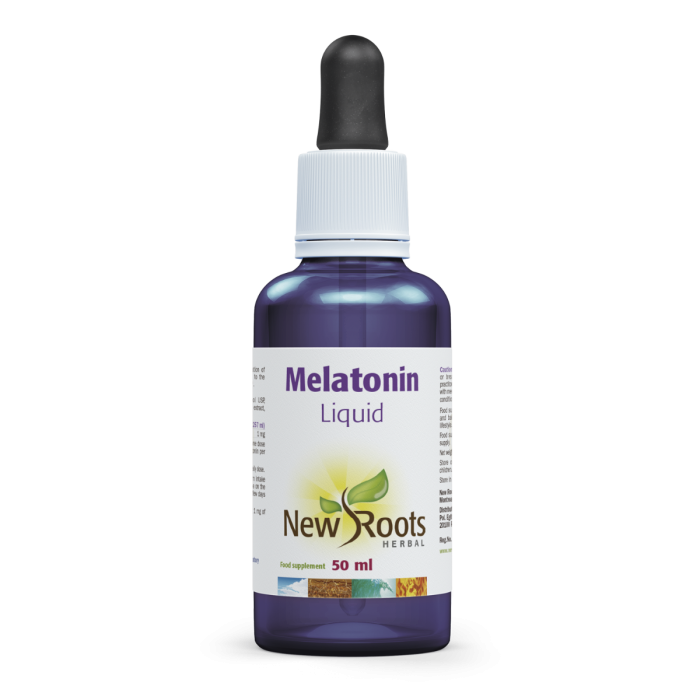
Melatonin in the form of a dietary supplement helps restore a normal sleep cycle in people with sleep-wake rhythm imbalances, thereby promoting restful, high-quality sleep. Melatonin reduces the time it takes to fall asleep, increases the duration of the REM (rapid eye movement) phase, helps improve symptoms associated with jet lag, and is effective against insomnia in older people, who often have low melatonin levels.
Melatonin is also involved in a wide variety of biological processes, such as stimulating the immune system and protecting the cardiovascular system. It provides significant benefits in neurodegenerative diseases, making it an anti-ageing hormone.
INGREDIENTS:
MELATONIN: This is a hormone synthesised and released by the pineal gland. It is produced from tryptophan and serotonin, and its release follows a circadian rhythm, meaning that it increases in darkness and decreases in light. Light stimuli that reach the retina are transmitted by the retinohypothalamic tract to the suprachiasmatic nucleus (biological clock), where the synthesis and release of melatonin are stimulated. In daylight, the photoreceptor cells of the retina are hyperpolarised, which inhibits the release of melatonin.. In darkness, photoreceptors activate the system and the activity of the pineal gland increases. Melatonin release occurs shortly after nightfall, with peak release in the middle of the night, between 2 a.m. and 4 a.m. It then gradually decreases, with concentrations 3 to 10 times lower during the day. In addition to the pineal gland, many extra-pineal tissues and organs have the ability to synthesise melatonin. Extra-pineal melatonin synthesis does not follow a light/dark rhythm, and it has been hypothesised that it is used within these tissues and organs themselves in a protective function against oxidative stress (1,2).
It is known that melatonin synthesis decreases with age and that in people over 75, the daily melatonin rhythm is only a small fraction of that observed in individuals aged 20 to 30. It is precisely this decline in melatonin levels coinciding with the ageing process that has prompted many researchers to consider the possible effects of melatonin as a substance capable of delaying the ageing process or alleviating age-related disorders (3,4).
Numerous studies have established a link between melatonin and a wide range of neuroendocrine and neurophysiological cellular processes. Melatonin stimulates the immune system, protects the cardiovascular system, improves post-menopausal symptoms and provides significant benefits in neurodegenerative diseases such as Alzheimer's and Parkinson's disease (5-10).
Melatonin has been extensively studied in relation to sleep disorders. It has been shown to be beneficial in treating insomnia in older people, without the side effects typically associated with hypnotic drugs (excessive sedation, rebound insomnia, tolerance and dependence). Melatonin accelerates sleep induction, increases REM sleep duration, improves sleep quality and reduces the time it takes to fall asleep. It is effective in sleep disorders caused by circadian rhythm disruption, such as changes in work schedules or jet lag, which cause desynchronisation between the body's circadian cycle and external environmental conditions. This desynchronisation occurs almost systematically – although to varying degrees – when crossing five or more time zones. Melatonin is also used to help visually impaired people establish a day/night cycle (11,12).
Melatonin also aids other physiological functions because of its powerful antioxidant properties. Its use thus opens up new prospects in the control of pathologies linked to oxidative stress, such as atherosclerosis or neurodegenerative processes such as Parkinson's disease or Alzheimer's disease. Studies suggest that 45% of Alzheimer's patients suffer from sleep disorders and agitation in the evening due to decreased melatonin levels. Melatonin reduces fatty acid peroxidation in the striatum, hippocampus and midbrain regions in experimental models of Parkinson's disease. Melatonin and its metabolites have also been shown to have a cardioprotective effect thanks to their highly effective antioxidant action against oxygen and nitrogen free radicals. Melatonin is also capable of stimulating the activity of various antioxidant enzymes while increasing levels of glutathione, an important intracellular antioxidant. Finally, various studies have shown that melatonin also exerts an anti-inflammatory action, in this case in coronary atherosclerosis and acute coronary disease. (13-15).
References:
1) Lewy, Alfred J., and David A. Newsome. "Different types of melatonin circadian secretory rhythms in some blind subjects." The Journal of Clinical Endocrinology & Metabolism 56.6 (1983): 1103-1107. 2) Zhdanova, Irina V., and Valter Tucci. "Melatonin, circadian rhythms, and sleep." Current treatment options in neurology 5.3 (2003): 225-229. 3) Touitou, Yvan. "Human aging and melatonin. Clinical relevance." Experimental Gerontology 36.7 (2001): 1083-1100. 4) Huether, Gerald. "Melatonin as an antiaging drug: between facts and fantasy." Gerontology 42.2 (1996): 87-96. 5) Carrillo-Vico, Antonio, et al. "Melatonin: buffering the immune system." International journal of molecular sciences 14.4 (2013): 8638-8683. Further literature references can be found in the product information sheet